Rayna – Now we’re talkin’
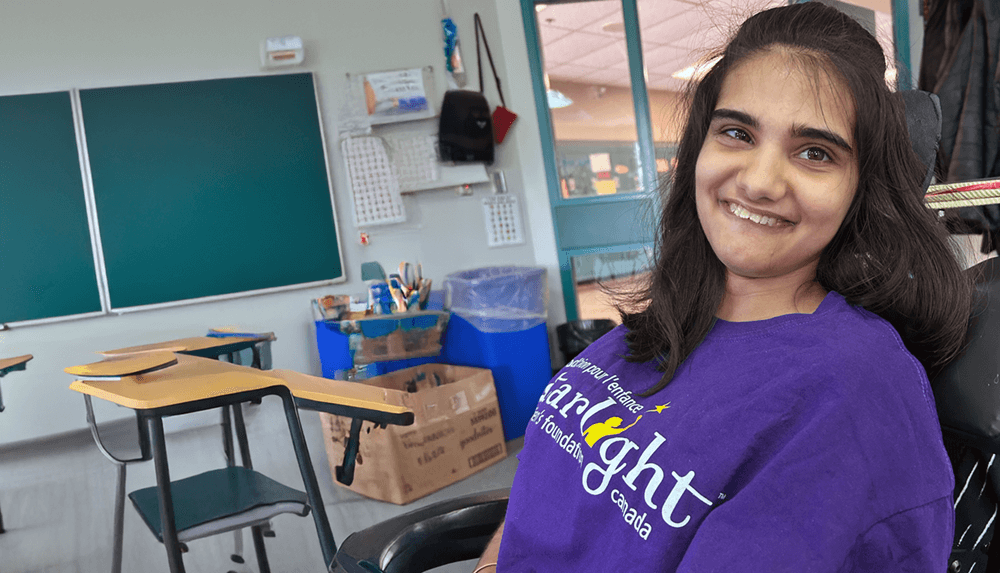
Rayna is a vibrant student at Thomas Haney Secondary School in Maple Ridge, BC, surrounded by a dedicated support team and a loving family. Her journey with Augmentative and Alternative Communication (AAC) highlights the importance of ongoing school supports and ensuring a student’s health and wellness needs are met so full potential can emerge.
Rayna first accessed Eye Gaze technology with SET-BC in 2019 using a tablet with a TD EyeMobile Plus. At that time, her progress was limited due to health-related challenges that made consistent access difficult. However, after medical procedures and intervention, Rayna’s stamina, comfort, and overall readiness improved significantly. When her team reintroduced Eye Gaze, her growth was remarkable. What began as a simple exploration quickly developed into confident, purposeful communication.
With the ongoing support from her team (Support Teacher Michelle Borghesi, Education Assistants Lisa Little and Sarah Burden, and Speech-Language Pathologist Emily Black), Rayna progressed from early targeting and cause-and-effect activities in Look to Learn to fully navigating her AAC system. As a multimodal communicator, she embraces a Total Communication approach, combining vocalizations, body language and her AAC to communicate with others. She has become a proficient Voco Chat user on Grid 3, using her Grid Pad 13 to share thoughts, express needs, and show her sense of humour.
Rayna uses her device at school, home, and out in the community. Whether she’s ordering independently at Starbucks, selecting songs to listen to on Spotify, scrolling Instagram posts, or sending emojis online to her family, Rayna is increasingly in control of her own voice. She is always eager to explore new personalized vocabulary, collaboratively built by her school and home teams, that reflects her interests, routines, and relationships. Most importantly, Rayna shows everyone around her exactly who she is: a funny, social, and charmingly cheeky teenager. She jokes with school staff, tells adults to “go away” when she wants to hang out with friends, loves Starbucks, avoids schoolwork when she can, and forms genuine friendships.
Rayna’s story reminds us that implementing assistive technology can feel daunting and can be influenced by timing, health, and other factors beyond our control. There will be ups and downs, but her journey shows that with time, continued supports, and the right tools, meaningful growth is possible. These tools have not only supported Rayna’s learning, but helped strengthen her independence, reveal her personality, and amplify her potential. Her team’s perseverance and commitment to meeting her where she is at has opened her world to new opportunities.